
In the digital age, pornography has become one of the most widely consumed forms of online media. With instant access through smartphones and streaming platforms, millions of people encounter pornographic content daily.
While many people see pornography as simple entertainment or fantasy, psychologists and relationship experts warn that it can sometimes create unrealistic expectations about relationships, intimacy, and body image.
Understanding the difference between scripted entertainment and real-life intimacy is essential for developing healthy relationships and realistic expectations.

1. The Myth That Porn Is Just Harmless Fantasy
Many people assume pornography is simply harmless fantasy. However, like any powerful media format, it can influence perceptions and expectations.
Pornographic content often removes emotional context, communication, and real relationship dynamics. Real intimacy usually involves trust, communication, emotional connection, and mutual respect—elements rarely emphasized in scripted scenes.
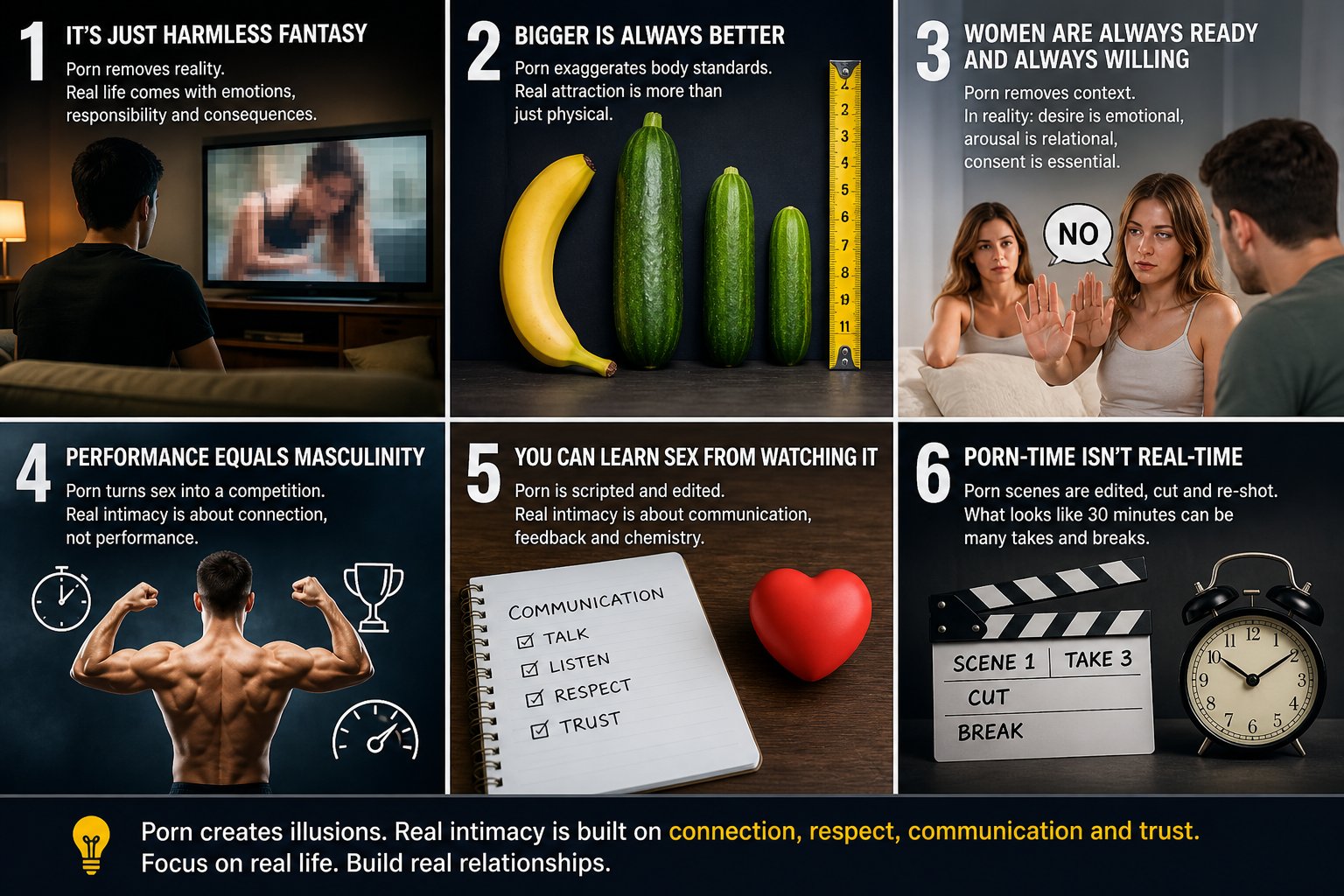
2. Unrealistic Body Standards
Pornography frequently presents exaggerated body standards. Professional performers are often selected based on specific physical traits, and lighting, editing, and camera techniques further enhance these characteristics.
Psychology research shows that repeated exposure to idealized bodies in media can influence body image and self-confidence.
In real life, attraction is influenced by personality, emotional compatibility, and shared experiences—not only physical appearance.
3. The Myth of Instant Desire
Pornographic scenes often portray individuals who appear instantly ready for intimacy without emotional context.
In real relationships, desire usually develops through emotional connection, trust, and communication. Healthy intimacy requires mutual consent, comfort, and understanding between partners.
4. Performance Equals Masculinity
Another misconception promoted by pornographic media is the idea that sexual performance defines masculinity.
Pornography often frames intimacy as a performance focused on endurance, intensity, or dominance.
Relationship experts emphasize that healthy intimacy is less about performance and more about emotional presence, empathy, and responsiveness.
5. Pornography Is Not Education
Some individuals assume that watching pornography can teach them about intimacy. In reality, pornographic content is designed as entertainment rather than educational material.
Scenes are scripted, choreographed, and edited. They rarely demonstrate communication, emotional awareness, or the complexity of real relationships.
Accurate relationship education typically comes from credible sources such as health professionals, educational programs, and open communication between partners.
6. Porn Scenes Are Highly Produced
Many viewers assume pornographic scenes occur continuously in real time.
In reality, production involves multiple takes, lighting adjustments, editing, and breaks. Scenes may be assembled from different recordings to create a seamless final product.
Comparing real relationships to edited media can therefore lead to unrealistic expectations.
The Psychological Impact of Unrealistic Comparisons
Psychologists emphasize that unrealistic comparisons with edited media can influence self-perception and expectations about relationships.
- Unrealistic body expectations
- Performance anxiety
- Misunderstanding of intimacy and communication
- Reduced focus on emotional connection
Developing media literacy helps individuals recognize how media content is produced and how it influences perception.
Building Healthier Expectations
Healthy relationships are built on trust, communication, and emotional awareness.
Real intimacy is not a scripted performance—it evolves through mutual respect, shared experiences, and genuine connection.
Understanding the difference between entertainment media and real relationships helps people build healthier expectations and stronger partnerships.
Final Thoughts
Pornography represents a highly produced form of digital media designed to capture attention and stimulate viewers. However, it often presents a simplified version of intimacy.
Recognizing the difference between media portrayals and real human relationships allows individuals to approach intimacy with greater awareness, empathy, and realism.