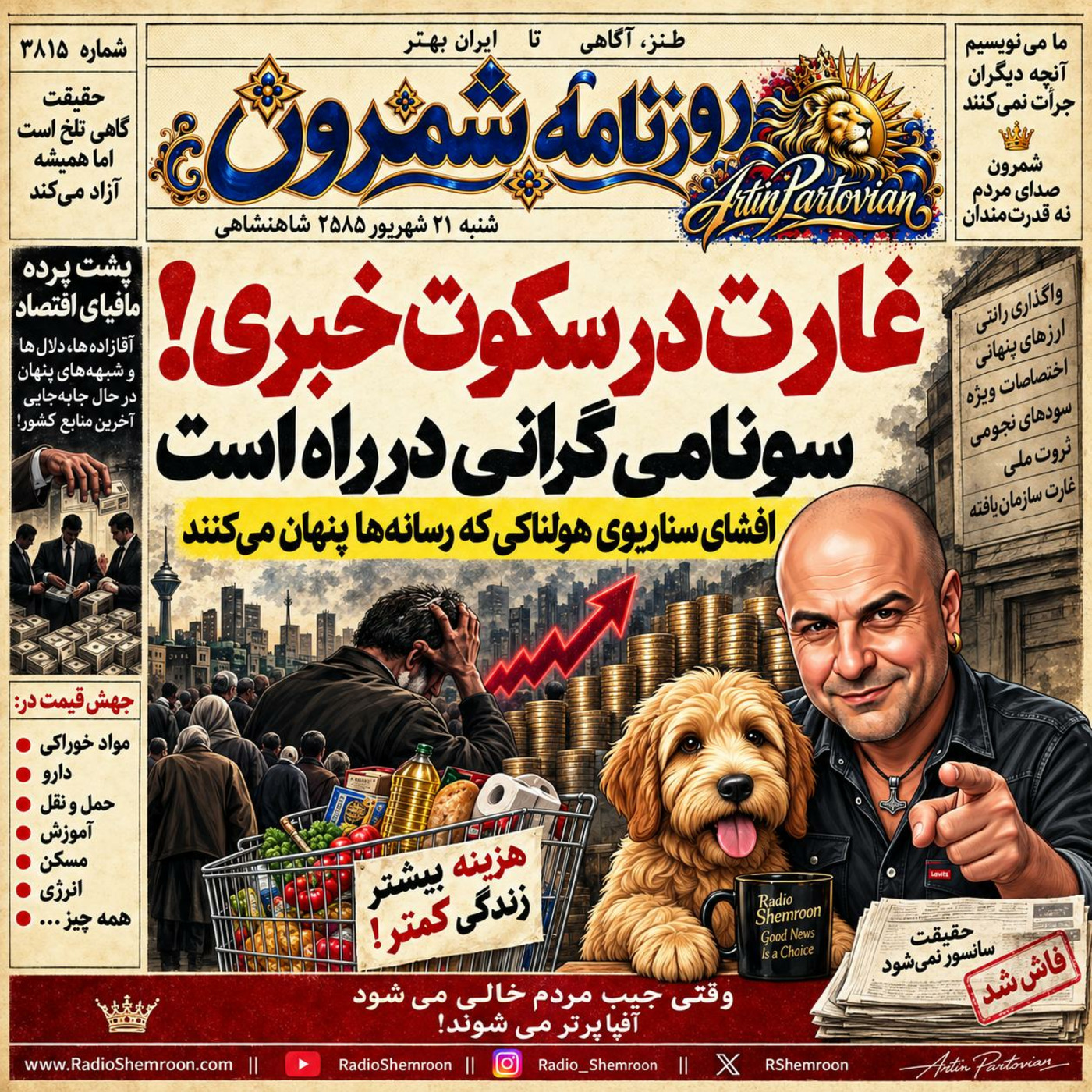
The Wolf Within: Economic Crisis, Political Propaganda, and the Search for Truth in Iran
Every society faces a battle that is not always visible on the streets, in parliament, or on television. It is the battle between reason and anger, truth and propaganda, awareness and conformity, humanity and what can be described as the wolf within.
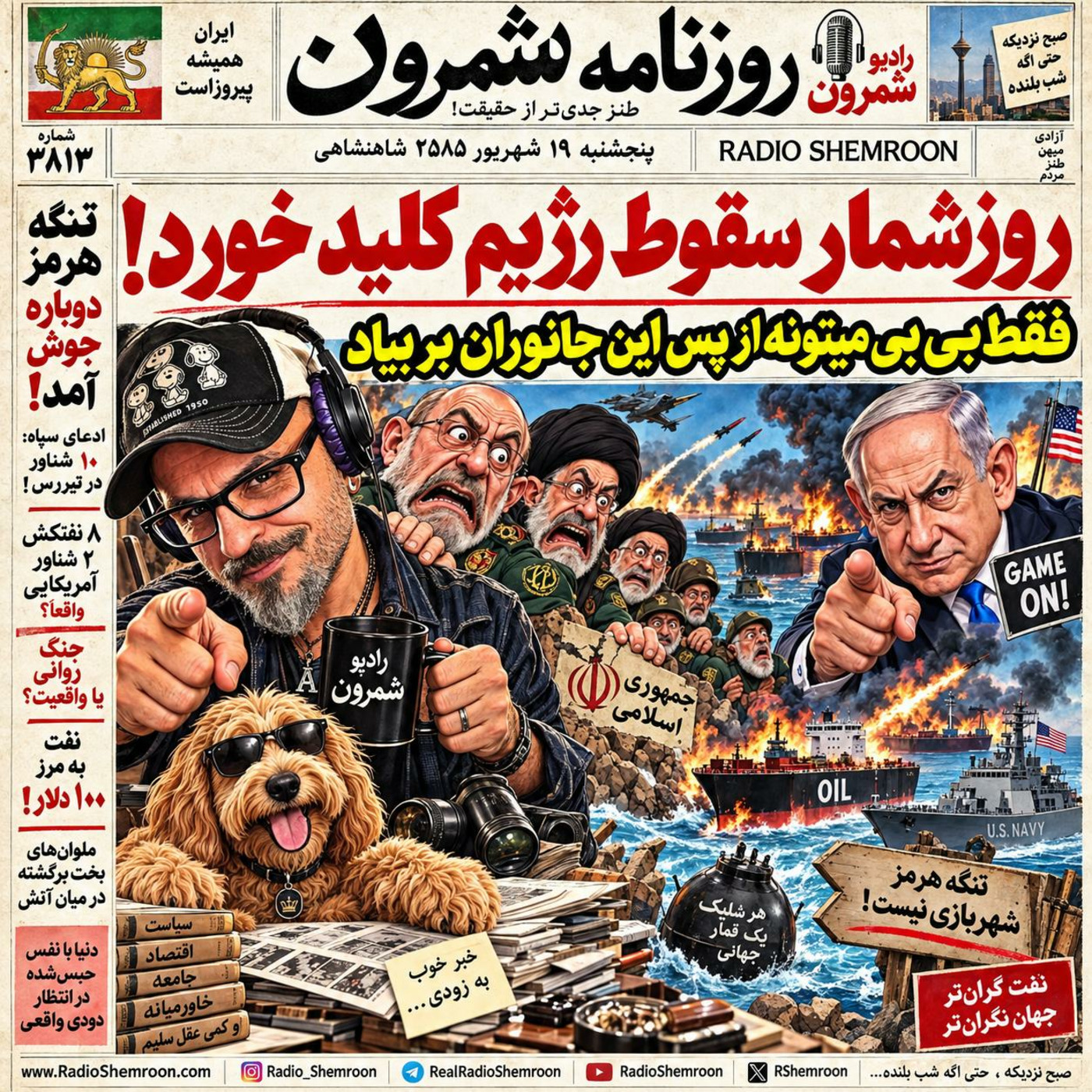
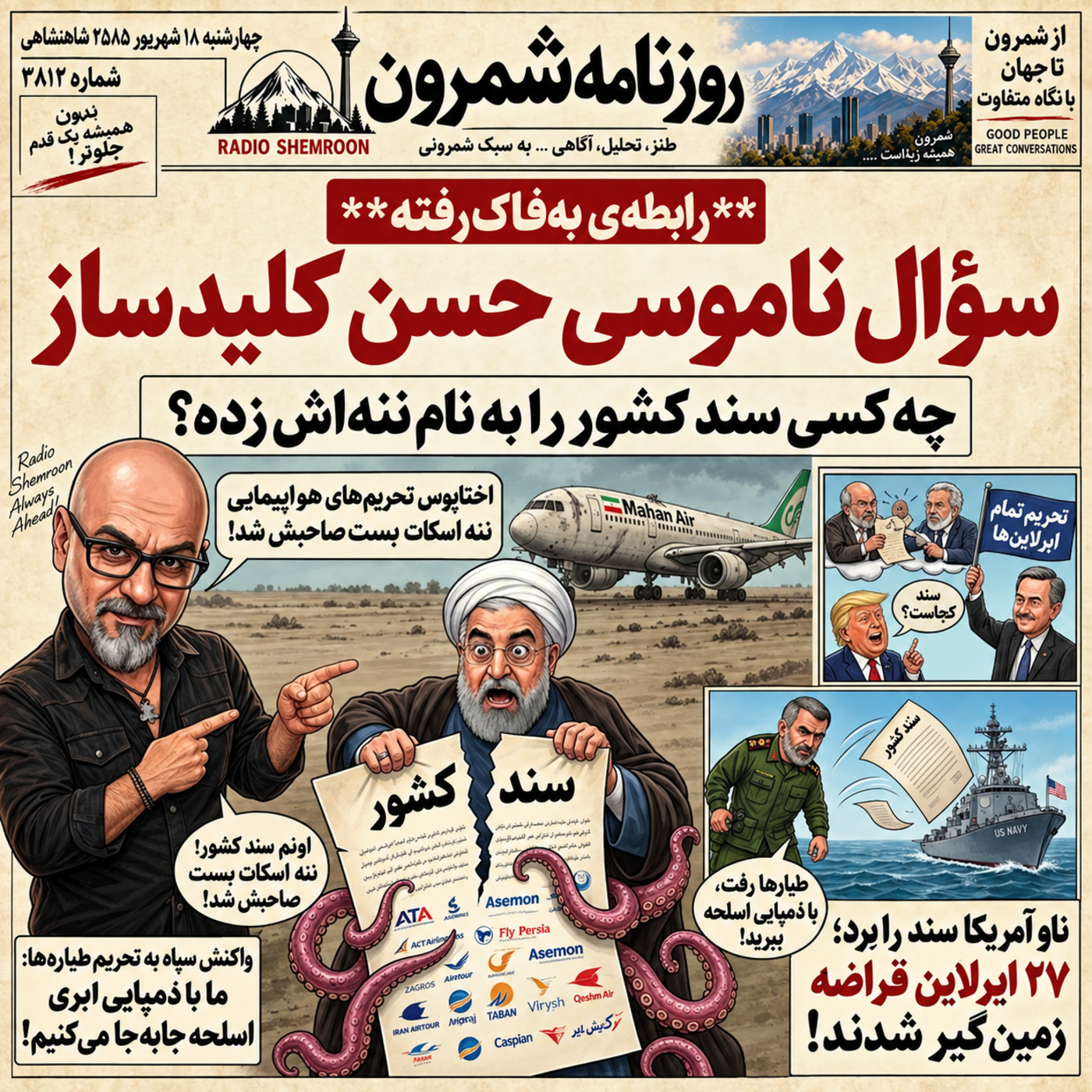
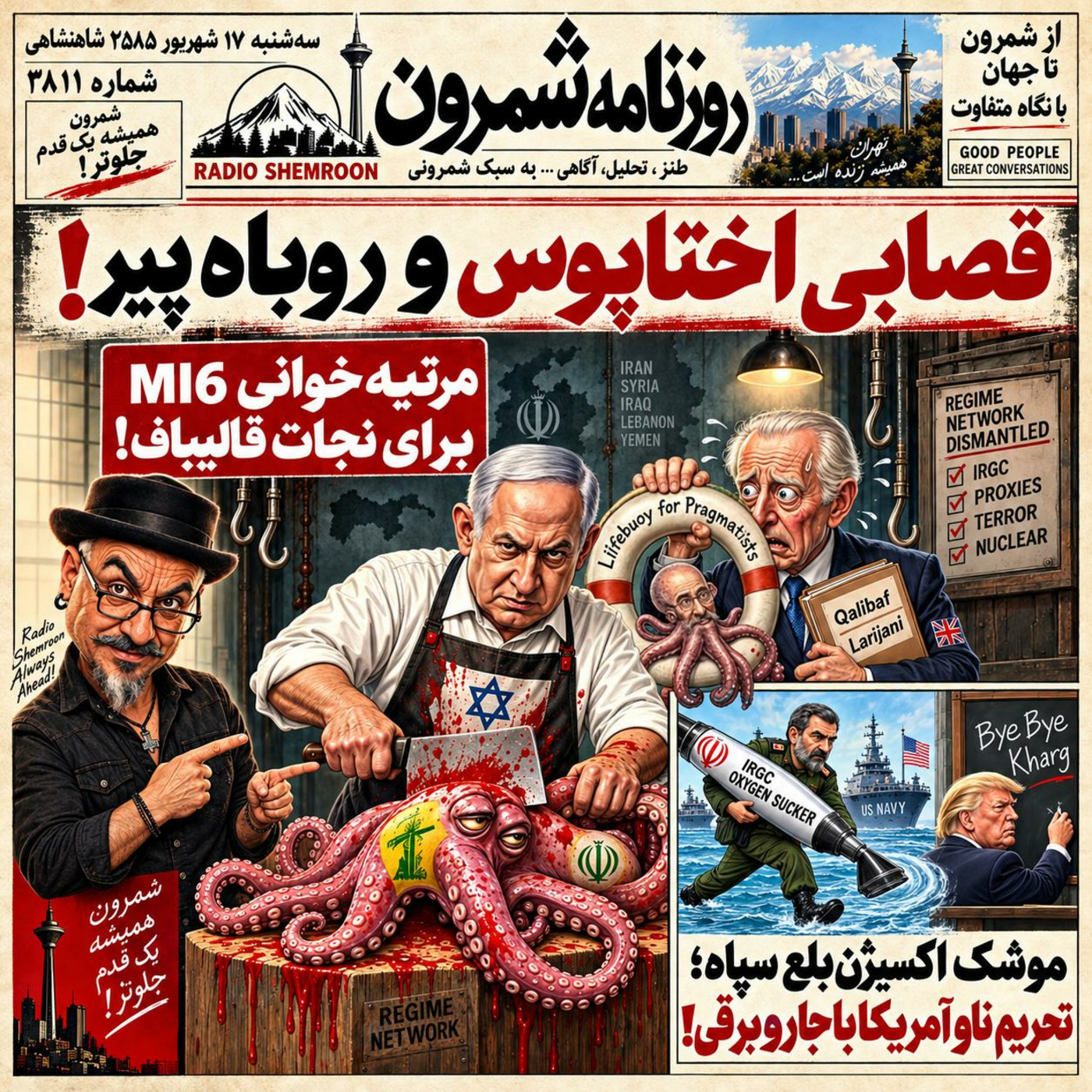
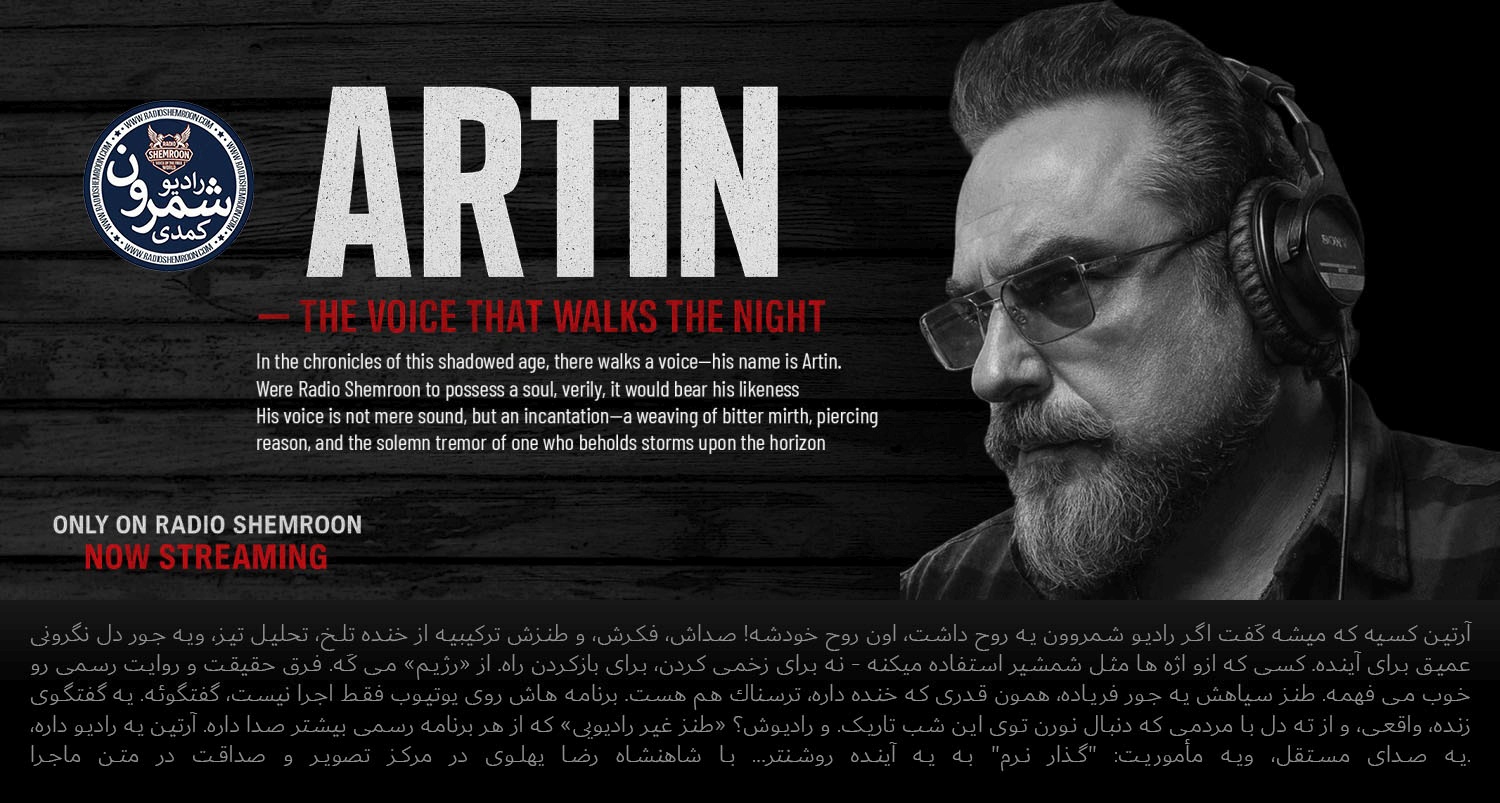
In a recent Radio Shomroon program, this idea becomes the starting point for a broader discussion about human behavior, political power, economic hardship, inflation, corruption, media censorship, government propaganda, and the responsibility of independent media in Iran.
Drawing inspiration from the famous imagery associated with Iranian poet Fereydoun Moshiri and the metaphor of the wolf hidden inside human nature, the program argues that the most dangerous battles are not necessarily fought with physical strength. They are fought through thought, awareness, fear, information, and the choices people make when confronted with pressure.
The Wolf Within: A Metaphor for Human Nature
The central metaphor is simple but powerful: every human being may carry a hidden instinct capable of becoming destructive when reason, compassion, and self-control disappear.
The wolf is not merely an external enemy. It can represent anger, greed, cruelty, manipulation, fear, intolerance, and the desire to dominate others. The real challenge is therefore not simply defeating another person. It is recognizing the destructive impulses within ourselves before they become stronger than our humanity.
The program repeatedly returns to the idea that strength alone cannot defeat this inner wolf. Physical power is not enough. The decisive weapons are critical thinking, education, awareness, empathy, self-control, and intellectual independence.
This metaphor also becomes relevant to political society. When people repeatedly surrender their judgment to propaganda, fear, anger, political tribalism, or misinformation, the metaphorical wolf becomes a collective force.
When Anger Replaces Reason
One of the strongest themes in the discussion is the danger of allowing anger to become a permanent guide for political and social behavior.
A powerful person can still become trapped by his own anger. Someone who appears confident and successful may nevertheless lose the ability to distinguish between justice and revenge, criticism and hatred, or political disagreement and personal destruction.
The message is therefore broader than Iranian politics. It is a warning about human behavior itself: if people repeatedly tolerate cruelty, eventually cruelty begins to look normal.
The same principle can apply to political culture. When citizens become accustomed to lies, censorship, corruption, intimidation, and manipulation, the abnormal gradually becomes ordinary.
Radio Shomroon and the Role of Political Satire
Within this context, Radio Shomroon presents itself as a platform combining political commentary, satire, humor, social criticism, and discussion of Iranian current affairs.
The program emphasizes that radio remains different from purely visual media. For listeners driving, working, or following a program without watching a screen, music and storytelling remain important parts of the broadcasting experience.
Yet the program also argues that listeners should pay attention to the meaning behind the music and cultural references rather than judging a broadcast solely by whether a particular song is entertaining.
Political satire can function as more than entertainment. In environments where direct political discussion may be restricted or heavily polarized, humor can create an alternative language through which audiences examine power, public policy, political personalities, and social contradictions.
Iran's Economic Crisis and the Cost of Inflation
The second major theme of the program is the economic pressure facing ordinary people in Iran. The discussion focuses particularly on inflation, declining purchasing power, rising prices, currency instability, housing affordability, food costs, medicine, and the financial pressure experienced by retirees and middle-class families.
According to the program's commentary, official economic statistics can fail to fully capture the lived experience of ordinary households when the prices of essential goods rise significantly faster than the headline figures suggest.
Housing, meat, medicine, food, and other necessities are presented as examples of expenses that directly affect household budgets. The broader argument is that economic statistics become meaningful only when they are connected to people's real purchasing power and everyday lives.
For a family struggling to afford food, rent, medicine, or basic necessities, an abstract inflation figure may provide little comfort. The real measure of an economic crisis is what people can actually buy with their income.
Inflation Beyond the Numbers
Inflation is not simply a percentage published in an economic report. It can transform the structure of society.
When wages fail to keep pace with essential expenses, households reduce consumption, postpone medical treatment, abandon housing plans, cut education expenses, and increasingly depend on savings or debt.
Over time, persistent inflation can weaken the middle class and deepen the economic divide between people who possess assets and those who depend primarily on wages or fixed pensions.
The Radio Shomroon discussion describes this process as a growing economic burden on ordinary Iranians, particularly retirees, workers, young people, and families attempting to maintain a basic standard of living.
Currency Devaluation and the Pressure on Ordinary Families
Currency depreciation is another central issue in the program's economic commentary.
When the value of the national currency declines, imported products and goods connected to international prices can become more expensive. The effects can spread through supply chains, affecting everything from household consumption to industrial production.
The program argues that the burden of such economic adjustments ultimately reaches ordinary citizens: pensioners, workers, young people, parents, and families trying to survive on increasingly limited purchasing power.
This is why currency policy cannot be discussed only as an abstract financial issue. Exchange rates, monetary policy, public debt, banking problems, and inflation eventually become household issues.
Corruption, Public Resources, and Political Accountability
A particularly forceful part of the program concerns allegations of corruption and the management of national resources.
The broadcast raises questions about the alleged transfer or restructuring of valuable public assets, the management of pension funds, foreign currency allocations, banking imbalances, and the relationship between government institutions and economically powerful networks.
These claims are presented in the program as evidence of what the hosts describe as hidden economic extraction from society. Whether individual allegations are accurate requires independent documentation and verification; however, the underlying political question remains important: Who is accountable when public resources are lost, mismanaged, or transferred?
Political accountability requires more than accusations. It requires documents, financial records, independent investigations, transparent institutions, investigative journalism, and the ability of citizens to ask difficult questions without fear.
Media Silence and the Information Gap
Another major subject is the role of mainstream media in reporting economic and political problems.
The program criticizes what it describes as the silence of media organizations that are financially or politically connected to the authorities. From the program's perspective, the absence of uncomfortable reporting can create an information gap between official narratives and the daily reality experienced by citizens.
Independent journalism is particularly important during periods of economic crisis because citizens need access to information that allows them to evaluate government claims, official statistics, and competing political narratives.
A healthy media environment should allow different sides of an argument to be examined, challenged, documented, and independently verified.
Political Propaganda and Economic Understanding
The program also uses humor and satire to criticize political communication, particularly when political figures appear unable to explain complicated economic issues in a convincing way.
One recurring point is that political propaganda can become detached from economic reality. A government may present optimistic messages about the economy while ordinary citizens experience rising prices, declining purchasing power, housing problems, or shortages.
Satire becomes a method of exposing this contradiction. Instead of presenting political rhetoric as unquestionable truth, satire asks the audience to step back and examine it.
The deeper lesson is that political communication should not replace economic literacy. Citizens need to understand inflation, currency depreciation, government borrowing, banking systems, public spending, taxation, and purchasing power well enough to evaluate political claims for themselves.
Economic Literacy as a Form of Political Freedom
Economic literacy is often treated as a technical subject reserved for economists, financial analysts, and government officials. But economic decisions affect everyone.
A citizen does not need to be an economist to ask basic questions:
- Why are prices rising?
- Why is the national currency losing purchasing power?
- How is the government financing its spending?
- What happens when banks accumulate large imbalances?
- Who benefits from economic policies?
- Who ultimately pays for inflation?
- How reliable are official economic statistics?
- What independent evidence supports political claims?
These questions are not inherently partisan. They are fundamental questions of public accountability.
Why Independent Thinking Matters
The metaphor of the wolf ultimately returns the discussion to the individual.
Political systems can influence information, but individuals still have the responsibility to think, question, compare sources, and resist manipulation.
Independent thinking does not mean automatically rejecting everything a government says. It also does not mean believing everything an opposition group, activist, commentator, or media outlet says.
Genuine critical thinking means applying the same standard of evidence to everyone.
Question the government. Question the opposition. Question the media. Question yourself.
This is one of the most important defenses against propaganda and political polarization.
From Political Division to Public Awareness
Iranian political discourse has often been shaped by deep divisions, competing ideologies, historical grievances, and intense disagreements about the country's future.
But political disagreement does not have to destroy the possibility of dialogue.
A mature political culture allows people to disagree while continuing to investigate facts, discuss economic problems, challenge institutions, and recognize the humanity of those on the other side.
The alternative is political tribalism, where every criticism is interpreted as betrayal and every political opponent becomes an enemy.
Such an environment makes meaningful accountability almost impossible because loyalty becomes more important than truth.
The Middle Class Under Pressure
One of the most important consequences of prolonged inflation is its impact on the middle class.
Young people may find home ownership increasingly distant. Retirees can see fixed incomes lose purchasing power. Families may struggle with rent, food, healthcare, education, and transportation costs.
When economic mobility disappears, frustration becomes social as well as financial.
A society in which a generation of young people cannot reasonably imagine buying a home, building savings, or creating a stable future risks producing not only poverty but also hopelessness.
Why People Sometimes Remain Silent
The program raises another difficult question: if economic hardship becomes so severe, why does widespread public resistance not always appear immediately?
Silence can have many causes. Fear is one. Exhaustion is another. People may be overwhelmed by the effort required simply to survive.
Social fragmentation can also make collective action difficult. When individuals feel isolated, they may believe that their personal suffering is unique rather than part of a larger social pattern.
Information restrictions can make this even more complicated. If citizens cannot easily compare their experiences, prices, wages, statistics, and stories with those of others, understanding the scale of a problem becomes harder.
Breaking the Silence Through Documentation
One practical idea emphasized by the program is the importance of collecting evidence from everyday life: receipts, prices, household expenses, and firsthand observations.
Such information should not automatically be treated as proof of a national trend, but it can help journalists and researchers investigate discrepancies between official statistics and lived experience.
Independent documentation can transform vague complaints into evidence-based questions.
Instead of simply saying that life is becoming more expensive, citizens can document how the price of specific goods changes over time. Instead of making general accusations about corruption, investigators can examine contracts, ownership structures, financial records, and government decisions.
Evidence is stronger than outrage.
Humor as a Weapon Against Political Absurdity
The program's use of humor is not accidental. Political satire can make complicated subjects accessible while exposing contradictions that formal political language sometimes hides.
Economic policy can be difficult to explain. Satire can reduce a complicated argument to an image, a joke, a metaphor, or an absurd scenario that audiences immediately understand.
This is particularly powerful when discussing propaganda. A humorous analogy can sometimes reveal the weakness of an argument more effectively than a lengthy technical explanation.
Yet satire also has a responsibility. The fact that something is funny does not make it true. Humor should encourage audiences to investigate rather than replace evidence.
Freedom of Expression and Independent Iranian Media
At the heart of the discussion is the question of media independence.
Independent Iranian media, diaspora media, podcasts, radio programs, digital platforms, and social media channels have become important spaces for political discussion among Iranians around the world.
Their value depends on their willingness to challenge powerful actors while also being willing to challenge their own assumptions.
Freedom of expression is strongest when it includes not only the right to speak, but also the right of audiences to question, criticize, verify, disagree, and demand evidence.
Truth Should Not Belong to One Political Camp
Perhaps the most important lesson from the discussion is that truth cannot be permanently owned by any political faction.
Governments can produce propaganda. Opposition movements can also produce propaganda. Media organizations can make mistakes. Activists can exaggerate. Commentators can misunderstand complex economic data.
The answer is not to stop listening. The answer is to become better at listening critically.
A politically mature audience should be able to hear an argument without immediately accepting it and reject an argument without automatically rejecting the person making it.
The Real Battle Is for the Human Mind
The metaphor of the wolf provides a useful conclusion to the entire discussion.
The most dangerous wolf is not necessarily the person standing across from us. It may be the fear that prevents us from asking questions, the anger that prevents us from listening, the greed that prevents us from caring, or the tribal loyalty that prevents us from recognizing facts.
A society becomes vulnerable when citizens stop thinking independently.
That is why the struggle for freedom is also a struggle for awareness, education, information, critical thinking, media independence, economic literacy, and intellectual courage.
The goal is not simply to defeat an opponent. The goal is to prevent the wolf within from becoming the master of society.
Conclusion: Stay Human
The central message can ultimately be reduced to something remarkably simple: stay human.
Question power without becoming consumed by hatred. Challenge propaganda without replacing it with another form of propaganda. Demand accountability without abandoning evidence. Defend freedom without abandoning responsibility.
Economic crises can destroy savings. Political propaganda can distort reality. Censorship can limit information. Polarization can divide communities.
But none of these forces should be allowed to destroy the capacity for independent thought.
The wolf within can be powerful. Yet awareness can be stronger.
And perhaps the first step toward a freer society is not simply defeating someone else’s wolf, but recognizing our own.